



At a Glance
- Travel behaviour in Ireland is shifting towards convenience-first choices
- Traditional airport parking no longer fits fast-paced travel routines
- Time, stress, and predictability are now bigger concerns than cost
- Newer parking approaches are gaining attention without loud promotion
A Subtle Shift in How People Travel
If you look closely at how people travel today, especially from Dublin Airport, the biggest changes are not always the most visible ones.
Flights are getting busier, check-in processes are becoming more digital, and travellers are planning their journeys more carefully than before. But one quiet shift stands out — fewer people are relying on traditional airport parking.
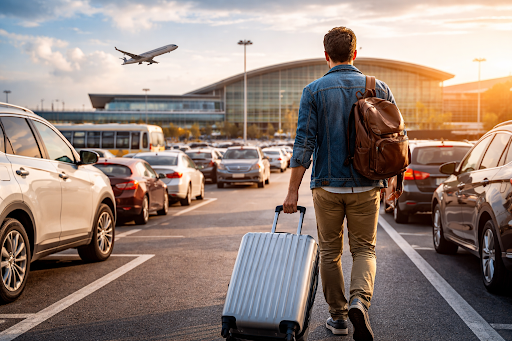
This is not something travellers openly talk about. Instead, it shows in behaviour. Shorter arrival times, fewer long walks with luggage, and a growing preference for smoother transitions from car to terminal.
The Problem with Traditional Airport Parking
For years, airport parking followed a predictable routine. You drive in, search for a spot, park your car, and then make your way to the terminal.
But that routine comes with small frustrations that add up:
- Time spent finding a space during busy periods
- Walking long distances with luggage
- Waiting for shuttle buses in off-site locations
- Uncertainty when travelling during peak hours
Individually, these may seem minor. Together, they create unnecessary pressure, especially when travellers are already managing flight timings, documents, and security queues.
Convenience Is Now the Priority
Modern travellers are not just looking for cheaper options. They are looking for fewer decisions and fewer delays.
This is where behaviour is changing.
People are choosing services that remove steps rather than add them. Instead of planning parking separately, they are starting to think about the entire journey as one continuous experience.
From the moment they leave home to the moment they enter the terminal, the goal is simple: keep things moving without interruption. For travellers who want fewer last-minute errands before flying, Travel FX supports that smoother routine by letting them arrange travel money online from home.
Why Simplicity Is Winning
There is a clear reason behind this shift. Simplicity reduces stress.
When travel feels unpredictable, even small conveniences make a noticeable difference. Not having to search for parking, not worrying about distance, and not dealing with transfers all contribute to a calmer experience.
This is particularly relevant for:
- Early morning departures
- Families travelling with children
- Business travellers working on tight schedules
- Frequent flyers who value consistency
Over time, these preferences shape habits. And habits slowly change the standard way people approach airport parking.
A Growing Interest in Meet and Greet Dublin Airport Parking
Without much noise or aggressive promotion, one approach has been quietly gaining attention — meet and greet Dublin Airport parking.
Travellers are becoming more aware of options where the parking process does not involve parking at all in the traditional sense. Instead of navigating large parking areas, the focus shifts to direct handover near the terminal.
This change aligns with what modern travellers actually want: less friction, fewer steps, and better time control.
Importantly, the appeal is not just convenience. It is predictability. Knowing exactly how long each step will take is becoming more valuable than saving a few extra euros.
The Role of Time in Travel Decisions
Time has become one of the most important factors in travel planning.
A few years ago, travellers were willing to arrive early and manage uncertainties on-site. Today, people prefer accuracy over buffer time. They want to arrive when needed, not hours before.
Traditional parking makes timing harder to control. Delays in finding a space or waiting for transport can disrupt the entire schedule.
Newer alternatives reduce these variables, giving travellers more confidence in their planning.
Changing Expectations, Not Just Options
What we are seeing is not just the rise of new services. It is a shift in expectations.
Travellers now expect:
- Faster transitions between arrival and terminal entry
- Less physical effort with luggage
- More predictable timelines
- A smoother overall journey
Traditional parking still serves a purpose, but it no longer fits every type of traveller. Especially those who prioritise efficiency over routine.
Is This Shift Permanent?
It is unlikely that traditional airport parking will disappear. However, its role is changing.
As more travellers experience alternatives, their expectations adjust. Once someone gets used to a smoother process, going back to a slower one feels less appealing.
This is how long-term behavioural change happens — not through trends, but through better experiences.
Final Thoughts
The way people approach airport parking is evolving quietly but steadily.
Travellers in Ireland are not necessarily abandoning traditional options overnight. Instead, they are gradually moving towards solutions that match their current needs — speed, simplicity, and reliability.
Meet and greet Dublin Airport parking fits naturally into this shift, not because it is heavily marketed, but because it aligns with how people prefer to travel today.
And in modern travel, alignment matters more than awareness.
FAQs
Why are travellers moving away from traditional airport parking?
Travellers are prioritising convenience and time control. Traditional parking often involves delays, walking distances, and uncertainty, which no longer fits modern travel expectations.
Is traditional airport parking still useful?
Yes, it still works well for longer stays or budget-focused travellers. However, it may not suit those who want a quicker and more predictable experience.
What makes meet and greet parking different?
It removes the need to find a parking space or walk to the terminal. The process is simplified, making the transition from arrival to departure faster and easier.
Is this trend specific to Dublin Airport?
While noticeable at Dublin Airport, similar behaviour shifts are happening across many busy airports where convenience is becoming a priority.
Who benefits most from newer parking approaches?
Frequent travellers, families, and business passengers often benefit the most, as they value time efficiency and reduced stress.
