



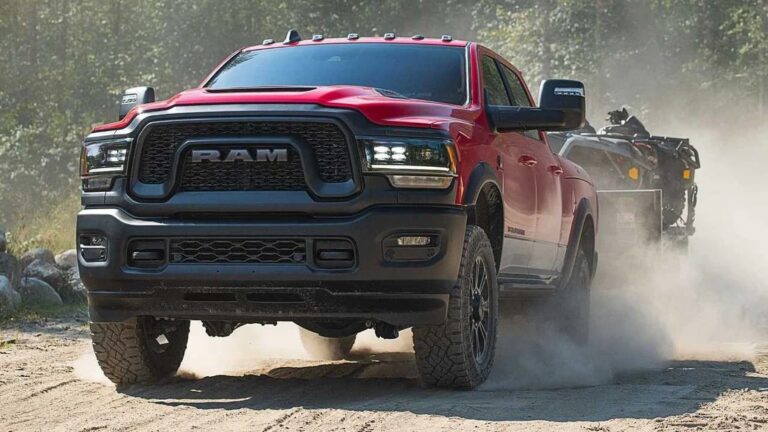
A Ram 2500 with the 6.7-liter Cummins typically costs around $7,000 to $10,000 a year to run for someone driving 15,000 miles, once you add up fuel, insurance, registration, routine maintenance and tires. Fuel is the biggest single line, usually $3,500 to $4,500 a year, followed by insurance and maintenance.
Where you land in that range depends heavily on how the truck is used. A 2500 that tows a camper a few weekends a year and commutes the rest of the time costs far less to keep than one pulling equipment trailers every day. The numbers below are built around typical ownership, so adjust them for your own miles, loads and local prices.
How Much a Ram 2500 Diesel Spends on Fuel Each Year
Most owners of recent Cummins-powered 2500s report around 15 to 18 mpg on the highway when empty and roughly 9 to 12 mpg when towing a heavy trailer. In mixed driving without a trailer, 15 to 16 mpg is a realistic average. At 15,000 miles a year and diesel around $3.80 a gallon, that works out to about 950 gallons and roughly $3,600.
Towing changes that quickly. If a third of your miles are spent pulling 10,000 pounds or more, annual fuel spending can easily climb past $4,500. Headwinds, highway speeds above 70 mph and big aftermarket tires all push consumption higher, and many owners find that dropping from 75 to 65 mph on long trips improves mileage by 1 to 2 mpg.
Diesel exhaust fluid is a small but regular addition. Consumption generally runs at 2 to 3 percent of fuel use, so a truck burning 950 gallons of diesel goes through roughly 20 to 30 gallons of fluid a year. Bought in bulk or at the pump, that’s usually under $100 annually.
Compared with the gas-powered 2500, the diesel usually gets 3 to 5 mpg better in real use, and the gap widens under load. Diesel often costs more per gallon, though, so the fuel savings alone rarely pay back the engine option unless you tow regularly.
Taxes, Registration and Insurance Costs to Expect
Diesel carries a higher federal fuel tax than gasoline, 24.4 cents per gallon versus 18.4 cents, and state fuel taxes stack on top of that. For a truck burning 950 gallons a year, the federal portion alone adds about $230, already built into the pump price you pay.
Registration is where location matters most. Some states charge a flat annual fee under $100, while others calculate fees by vehicle weight, value or age, and a new 2500 can cost several hundred dollars a year to register in value-based states. Because the 2500 sits near the 10,000-pound gross vehicle weight mark, a few states classify certain configurations differently, so check your local fee schedule before buying.
Sales tax on the purchase is a one-time hit that varies from zero to over 9 percent depending on the state and county. On a $60,000 truck, that difference can be more than $5,000. Business owners should also know that trucks above 6,000 pounds gross vehicle weight may qualify for accelerated depreciation when used primarily for work, which is worth discussing with a tax professional before purchase.
Insurance typically runs between $1,500 and $2,500 a year for a full-coverage policy, with younger drivers, urban areas and higher trim levels pushing toward the top of that range. Diesel trucks often cost slightly more to insure than gas versions because repair costs are higher.
Routine Maintenance and What It Costs
The 6.7 Cummins holds about 12 quarts of oil, so oil changes cost more than on a gas truck, usually $120 to $250 at a shop. The oil life monitor may allow intervals up to 15,000 miles in light use, but many owners who tow regularly change it every 7,500 to 10,000 miles. Plan on two oil changes a year for typical driving.
Fuel filters are the most important maintenance item on any modern diesel, because contaminated fuel can damage the high-pressure pump and injectors. Replacement intervals vary by model year, but many owners change them every 15,000 miles or sooner if they buy fuel from less busy stations. Many owners also add a lift pump or improved filtration to protect the injection system, and these replacement and upgrade components are a common first investment for anyone planning to keep a Cummins past 150,000 miles. Expect $80 to $200 per filter service, depending on whether you do it yourself.
Beyond that, budget for air filters every 15,000 to 30,000 miles, transmission fluid service every 60,000 miles or so under towing use, differential fluid changes and coolant service at longer intervals. Averaged over several years, routine maintenance on a 2500 diesel usually runs $800 to $1,500 a year.
Common Repairs and Wear Items on Higher-Mileage Trucks
Tires are a larger expense than many first-time owners expect. A set of quality load-range E tires for a 2500 typically costs $1,200 to $2,000 and lasts 40,000 to 60,000 miles, so spread over time that’s roughly $400 to $600 a year. Brakes take more of a beating on a heavy diesel too, especially if you tow without an exhaust brake.
The front suspension deserves attention on older, high-mileage trucks. Worn track bars, ball joints and steering components can cause the violent front-end shake owners call death wobble, usually triggered by a bump at highway speed. Replacing worn parts early is far cheaper than chasing the problem once it starts.
The 6-speed automatic behind the Cummins in most 2500s is dependable in stock form but doesn’t tolerate large power increases well. On 2019 and newer trucks, the high-pressure fuel pump design has drawn some attention, although reported failure rates have been lower than on certain rival engines. Owners planning to keep a truck past 150,000 miles often budget for a few upgrades that take pressure off the injection system, but clean fuel, regular filter changes and sensible modifications do most of the work.
How Your Driving Habits Change the Total
Short trips and long idling sessions are the most expensive way to drive a diesel. The engine never fully warms up, fuel economy drops and the aftertreatment system has fewer chances to clean itself, which can lead to sensor faults and extra service visits. If most of your driving is under 10 miles at a time, a diesel 2500 will cost more to run than the brochure suggests.
Long highway miles and regular towing, on the other hand, are where the Cummins shines. The engine runs at steady temperatures, fuel economy holds up and wear spreads over many miles. Diesel trucks also hold their value well, and a well-kept 2500 often sells for a noticeably higher share of its original price than a comparable gas truck after five years.
Before you buy, run the numbers with your own annual mileage, how often you tow and the insurance quote for your ZIP code. If the diesel only makes sense on paper when you assume heavy towing you’ll rarely do, the gas truck may be the better fit. If you tow often and plan to keep the truck for years, the Cummins usually earns its keep.
