



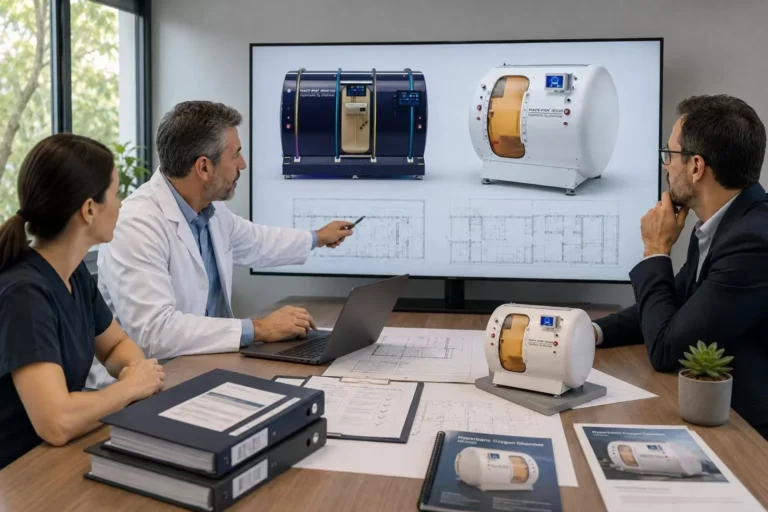
An imported chamber is delivered through a chain of responsibilities, not through a single commercial promise. Before a chamber is delivered, handover questions should identify the proposed hard chamber configuration, freight boundary, receipt record, installation planning, manufacturer information, and after-sales support route. Import managers, facility owners, distributors, and project coordinators need the same written account because each may control a different handoff.
An import handover record turns those handover questions into assigned work. It does not replace destination-market review, qualified installation, responsible operation, or local professional judgment. Its purpose is narrower: make delivery ownership visible before the equipment reaches a receiving point, while the supplier and buyer can still clarify who does what next.
Define delivery ownership before the chamber is delivered
Delivery ownership begins with a written boundary. Before the chamber is delivered, buyers should know where the supplier’s responsibility ends, who coordinates freight after that point, who receives the shipment, and who can decide whether an apparent discrepancy needs escalation. A phrase such as delivery arranged is not enough. This import handover record should name the location, responsible party, and next action for each transition.
Handover questions become more important when a distributor, freight partner, and facility owner are all involved. Each party may assume that another party will inspect documents, arrange local movement, or communicate with the manufacturer. The record prevents that assumption from becoming a gap. It gives the project a shared delivery ownership map before transport becomes urgent.
MACY-PAN describes OEM and wholesale sourcing information that can help an importer frame manufacturer and supplier questions. The macypansolutions material should be linked to the proposed commercial arrangement, not used to assume an unstated import responsibility. The buyer still needs a written answer about the actual configuration, delivery boundary, and support route.
Connect the hard chamber configuration to the receipt record
Define what the team expects to receive in the receipt record. Link the proposed hard chamber configuration, supplied components, available documents, and any visible condition or packaging checks to the commercial proposal. This does not require a facility team to make technical conclusions beyond its role. It requires the team to record what arrived, what document accompanied it, and what question needs a supplier response.
Configuration and receipt belong together because a generic delivery note cannot settle a model-specific question. If the proposal changed during procurement, the import handover record should show the current configuration and the source of the change. A receiving team can then compare the delivery paperwork against the information the buyer actually approved.
Make installation planning a pre-delivery responsibility
Installation planning should not start when a shipment is already at the door. Facility owners need to understand access, the planned receiving route, space assumptions, local coordination, and the supplier boundary described for the project. An importer may coordinate information, but a written record must identify who confirms that the actual site can receive the proposed chamber.
Keep the language practical. Record a site question as a question, assign it to the party able to answer, and retain the answer with the import handover record. Do not turn a supplier description into a guarantee about a location the supplier has not assessed. The responsible choice is to preserve the limitation and obtain the appropriate local review.
| Handover checkpoint | Record to check | Owner before delivery |
| Delivery ownership | Written freight and receiving boundary | Importer names the handoff contact. |
| Receipt record | Configuration reference, packing record, and document list | Receiving owner records discrepancies and escalation. |
| Installation planning | Access and site-readiness assumptions | Facility coordinator confirms local actions. |
| Support route | Supplier contact, documents, and issue path | Operating owner retains the handover record. |
Run the import handover record as a conversation before freight becomes time-sensitive. The importer can confirm the delivery ownership boundary, the facility coordinator can confirm the local route, the receiving owner can prepare the receipt record, and the support owner can check that documents have a destination. Each participant should be able to say what remains open. Silence is not confirmation.
Where the proposed hard chamber configuration, freight route, receipt arrangement, installation planning, and after-sales support route depend on different organizations, the record should show the whole chain in one place and state which handoff must occur before the next party can act, because a responsibility that is clear to one participant but invisible to the next can delay delivery even when every individual supplier response sounded reasonable.
Use direct language. Name the owner. Name the document. Name the next action. This is not an attempt to make an importer responsible for every downstream task; it is a way to prevent a real task from being lost between commercial, transport, and facility conversations.
Preserve manufacturer information without overreading it
Manufacturer information can clarify who supplied a proposal, who provides product information, and where technical questions may be directed. It does not settle every local requirement. Keep the manufacturer or supplier details relevant to the transaction in the import handover record, distinct from buyer-side responsibilities such as destination-market review, site preparation, and operating governance.
MACY-PAN should appear in the file where its information supports the proposed imported chamber and the stated support route. The macypansolutions material should also show what remains unknown or requires confirmation. This protects the importer from presenting general supplier material as if it were a complete answer to delivery ownership or installation planning.
Before the final delivery conversation, compare the import handover record against the actual commercial proposal one more time. Confirm that the named hard chamber configuration, delivery ownership, receipt record, installation planning assumption, manufacturer contact, and after-sales support route still describe the same transaction. When a supplier clarification changes one part of that picture, update the whole record rather than attaching the answer to an isolated email. This keeps the project coherent for the importer and the receiving facility.
Agree the after-sales support route before handover
After-sales support should be planned before delivery because it affects who keeps the documents, how questions are raised, and who receives later supplier communication. Record the support contact, the documents expected with the configuration, maintenance information provided, and the escalation path for a delivery or service issue. The macypansolutions reference can sit beside that project-specific support record without replacing it.
Support ownership may involve a distributor, facility, or buyer representative. The import handover record should name the role, not merely an organization. A named role creates continuity when an individual changes. It also makes a delayed question easier to route without reopening the original procurement discussion.
Receipt checks should also retain the facts that the receiving owner can actually observe. Record the delivery reference, the configuration reference used for comparison, the document set presented, and any matter that requires supplier clarification. Do not label a discrepancy as resolved until the responsible party records the next action. The handover record is strongest when it preserves a question as faithfully as it preserves an answer.
Keep operating and clinical decisions outside the import file
An imported equipment handover is not authorization to operate. Delivery planning, receipt checks, configuration records, and support documentation can make a project more traceable, but they do not determine clinical suitability or replace qualified local review. The import file should state that boundary clearly so commercial progress is not mistaken for a decision outside the importer’s authority.
The FDA has advised providers and facilities to follow manufacturer instructions for hyperbaric oxygen therapy devices and to maintain appropriate safety, training, monitoring, and supervision. For an importer, that reinforces the value of preserving configuration-specific instructions and assigning their handover owner. It does not replace the responsibilities of qualified people or local requirements in the destination setting.
Close handover questions before delivery becomes a crisis
Settle handover questions while the imported chamber is still a planned delivery. Review the import handover record with the buyer, receiving owner, facility coordinator, and support contact. Identify which answer is confirmed, which responsibility is accepted, and which question requires action before the next transition. A record that exposes an unfinished task early is more valuable than a polished file created after a problem appears.
For an initial supplier-information discussion, MACY-PAN information for imported chamber handover can be kept alongside the importer’s own delivery ownership and receipt record. Use that material to request proposal-specific clarification, then preserve the resulting answer in the handover file. The project gains confidence when every transition has a document, an owner, and a stated boundary.
