



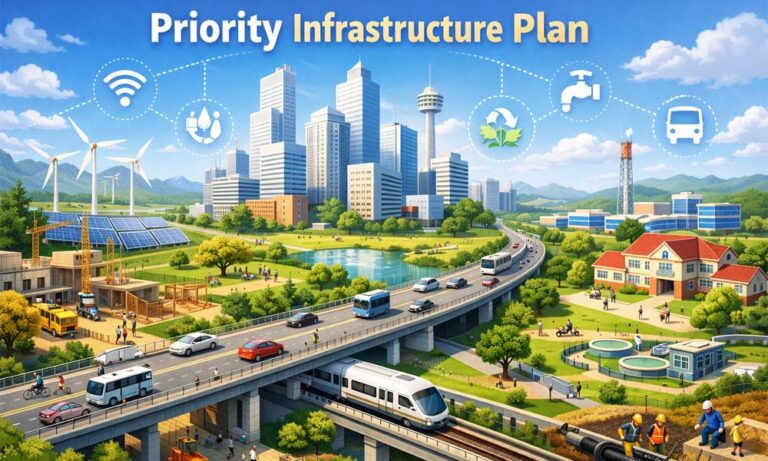
Cities are growing very fast in 2026. New homes, shops, and offices are coming up every day. But many cities are not ready for this growth. Roads get crowded, water systems fail, and people face daily problems.
Have you ever been stuck in traffic for hours? Or seen streets filled with water after rain? These problems happen when cities grow without proper planning. Life becomes stressful, and simple tasks take more time.
This is where a priority infrastructure plan becomes very important. It helps cities grow in a smart and organized way. It makes sure everything is built at the right time and in the right place.
In this article, we will explain everything in very easy words. You will learn what a priority infrastructure plan is, how it works, and why it is so important for better living.
What Is a Priority Infrastructure Plan?
A priority infrastructure plan is a simple plan that tells cities what to build first. It looks at roads, water, electricity, and other services. Then it decides which projects are most important.
Instead of building things randomly, this plan creates a clear path. It shows what should happen now and what should happen later. This helps cities stay organized and avoid confusion.
Most of these plans are made for 10 to 15 years. They look at how many people will live in the city in the future. Then they prepare everything in advance so systems do not fail.
In simple words, a priority infrastructure plan is like a roadmap. It helps cities grow step by step without problems. It makes sure people get good services at the right time.
Why Cities Need a Priority Infrastructure Plan
Without a priority infrastructure plan, cities can become messy very quickly. Roads get blocked, services break down, and people struggle in daily life. Growth happens, but it is not smooth.
Think about a new housing area with no proper roads or water supply. People move in, but basic needs are not met. This creates frustration and lowers the quality of life.
A good priority infrastructure plan solves these problems early. It makes sure services are ready before people need them. This keeps everything running smoothly.
Cities that plan well are easier to live in. Travel is faster, services are reliable, and people feel more comfortable. That is why planning is not a choice — it is a must.
How a Priority Infrastructure Plan Works
A priority infrastructure plan works in simple steps. First, planners collect data. They look at how many people live in the city and how the land is used.
Next, they try to understand the future. They ask questions like: How many people will live here in 10 years? Where will new homes be built? This helps them see future needs.
After that, they find problems. Maybe roads are too small or water systems are weak. Then they decide which problems should be solved first based on urgency.
Finally, they plan money and start building step by step. This clear process helps avoid mistakes. It makes sure everything is done in the right order and at the right time.
Main Parts of a Priority Infrastructure Plan
A strong priority infrastructure plan has many important parts. One part is population forecasting. This means guessing how many people will live in the city in the future.
Another part is land planning. This shows where homes, shops, and offices will be built. It helps planners know where services will be needed the most.
There is also infrastructure mapping. This shows what systems already exist and what is missing. It helps avoid building the same thing again or missing important areas.
Lastly, there are timelines and service standards. These tell when projects should happen and how good the services should be. All these parts work together to make the plan strong.
Key Areas Covered in Infrastructure Planning
A priority infrastructure plan covers many important areas. One major area is transport. This includes roads, buses, trains, and walking paths.
Another area is water and drainage. Clean water is needed for drinking, and good drainage helps prevent flooding. Without this, cities can face serious health problems.
Energy is also very important. Cities need electricity for homes, businesses, and industries. A strong energy system keeps everything running smoothly.
Digital systems are now a big part of life. Internet and communication help people work and stay connected. Schools, hospitals, and parks are also included, making life better for everyone.
How It Helps Cities Grow in a Smart Way
A priority infrastructure plan helps cities grow in a clean and organized way. It stops random growth and makes sure everything is planned properly from the start.
Instead of spreading out too much, cities grow in a focused way. This reduces travel time and makes services easier to manage. People can reach work, schools, and shops quickly.
It also helps new areas connect with old ones. Roads, water, and power systems are planned together. This avoids gaps and keeps everything smooth.
In simple words, this plan makes cities smarter. It helps them grow without stress, without chaos, and without wasting resources.
How It Improves Daily Life for People
A priority infrastructure plan makes daily life much easier. People spend less time in traffic and more time with family. Travel becomes faster and less stressful.
Water and electricity become more reliable. People do not have to worry about sudden cuts or shortages. This improves comfort and safety at home.
It also makes neighborhoods safer. Better roads, lights, and public spaces help people feel secure. Children can go to school safely, and families can enjoy parks.
Overall, life becomes simple and smooth. When cities are planned well, people feel happier and more relaxed in their daily routines.
Economic Benefits of a Priority Infrastructure Plan
A priority infrastructure plan also helps the economy grow. When new projects start, they create jobs for many people. Workers, engineers, and businesses all benefit.
Good infrastructure attracts companies. Businesses prefer cities with strong roads, power, and internet. This brings more investment and more opportunities.
It also reduces costs. When transport is fast and systems work well, businesses save money. This helps them grow and offer better services.
In the long run, the whole city becomes stronger. A good plan supports steady growth and creates a better future for everyone.
How It Protects the Environment
A priority infrastructure plan also helps protect nature. Cities use this plan to reduce pollution and keep the environment clean. It supports green ideas like planting trees and building parks. These small steps make a big difference over time.
It also helps manage water better. For example, good drainage systems stop flooding during heavy rain. This protects homes and roads from damage. Clean water systems also keep people healthy and safe every day.
Another important part is saving resources. The plan helps use less energy and reduce waste. Cities can use solar power or smart systems to save electricity. This makes cities more sustainable for the future.
In simple words, a priority infrastructure plan helps cities grow without harming nature. It keeps the air clean, water safe, and land protected. This creates a better place for both people and the environment.
Role of Government and Rules
The government plays a big role in a priority infrastructure plan. It creates the plan and makes sure everything follows proper rules. Without strong leadership, planning can fail and create confusion.
Different departments work together in this process. For example, transport, water, and energy teams must stay connected. This teamwork helps avoid delays and mistakes in projects.
Rules and policies also guide how projects are done. They make sure everything is fair and safe. These rules also help control costs and maintain quality in all systems.
When the government works well, cities grow smoothly. A strong priority infrastructure plan becomes easier to follow and more effective for everyone.
Why Community Input Is Important
A priority infrastructure plan becomes better when people share their ideas. Local residents know their problems better than anyone else. They can point out issues like broken roads or unsafe areas.
For example, a family may know that a street floods every year. This small detail can help planners fix a big problem. Without public input, such issues may be missed.
Community involvement also builds trust. When people feel heard, they support the plan more. This makes projects easier to complete without conflict.
In simple terms, people help make the plan stronger. A priority infrastructure plan works best when it includes real voices from the community.
Funding and Money Planning
Building infrastructure costs a lot of money. A priority infrastructure plan helps decide how money will be used wisely. It makes sure important projects get funding first.
Governments often use different sources of money. This includes public funds, private investment, and partnerships. These partnerships help share the cost and reduce pressure on budgets.
Another important part is planning for the future. It is not just about building systems but also maintaining them. Regular repairs and upgrades need proper funding too.
Good financial planning keeps projects running smoothly. A strong priority infrastructure plan ensures that money is used in the best way possible.
Challenges Cities Face in Planning
Even with a priority infrastructure plan, cities face challenges. One big problem is limited money. Sometimes, there are more projects than available funds.
Another challenge is coordination. Different departments may not work together well. This can cause delays and confusion in project delivery.
Data can also be a problem. If planners do not have correct information, decisions may not be accurate. This can lead to poor results.
However, a clear priority infrastructure plan helps reduce these problems. It gives direction and makes decision-making easier for everyone involved.
Real Examples of Smart Infrastructure Planning
Many cities around the world use a priority infrastructure plan to grow better. For example, smart cities use digital tools to manage traffic and services in real time.
In some places, old areas are redesigned into modern spaces. Roads are improved, parks are added, and services are upgraded. This makes the city more comfortable and attractive.
These examples show how planning brings real change. People can see better roads, cleaner areas, and improved services in daily life.
Learning from these examples helps other cities improve too. A good priority infrastructure plan can create real success stories.
Future of Priority Infrastructure Planning
In 2026, planning is becoming smarter with technology. A priority infrastructure plan now uses data and digital tools to make better decisions. This makes planning faster and more accurate.
Smart cities are using sensors and systems to track traffic, energy use, and water flow. This helps fix problems before they get worse. It also improves daily life for people.
Climate change is also shaping future plans. Cities now prepare for heat, floods, and other risks. This makes infrastructure stronger and more reliable.
The future is about flexibility and smart thinking. A modern priority infrastructure plan helps cities stay ready for any change.
Conclusion
A priority infrastructure plan is not just a plan. It is a way to build better cities for the future. It helps organize growth and improve daily life for everyone.
It supports the economy, protects the environment, and improves services. With proper planning, cities can avoid problems and grow smoothly.
Think about a city with clean roads, safe water, and fast transport. That is the result of good planning. It creates comfort and happiness for people.
In the end, smart planning leads to smart living. A strong priority infrastructure plan is the key to building cities that are safe, modern, and ready for tomorrow.
(FAQs)
What is a priority infrastructure plan in simple words?
A priority infrastructure plan is a simple plan that tells a city what to build first. It helps decide which roads, water systems, and services are most important so people can live comfortably without problems.
Why is a priority infrastructure plan important for cities?
It is important because it helps cities grow in a smooth way. Without it, cities face traffic, poor services, and delays. With a plan, everything is built on time and works properly for people.
How does a priority infrastructure plan improve daily life?
It makes life easier by reducing traffic, improving water and electricity, and making roads safer. People save time, feel safer, and enjoy better services in their homes and neighborhoods.
Who creates a priority infrastructure plan?
Government planners, engineers, and experts create the plan. They also take input from local people to understand real problems and needs before making decisions.
How long does a priority infrastructure plan last?
Most plans are made for about 10 to 15 years. However, they are updated regularly to match new needs, population changes, and new technology.
What sectors are included in a priority infrastructure plan?
It includes roads and transport, water systems, electricity, internet, schools, hospitals, and parks. All these systems are planned together so the city works smoothly.
How does a priority infrastructure plan help the economy?
It creates jobs, attracts businesses, and reduces costs for companies. Good infrastructure helps businesses grow, which leads to a stronger economy and more opportunities.
Can a priority infrastructure plan help with environmental problems?
Yes, it helps reduce pollution, manage water better, and prepare for climate risks like floods and heat. It supports green and clean solutions for a healthier environment.
What challenges do cities face when making these plans?
Cities may face problems like limited money, poor data, or lack of coordination between departments. But a clear plan helps reduce these problems and improves decision-making.
What happens if a city does not have a priority infrastructure plan?
Without a plan, cities can become messy and stressful. Roads get crowded, services fail, and growth becomes unorganized. This makes life harder for people and slows down development.
You may also read: Pigeimmo: The Smart New Way to Find Real Estate Leads Fast
