



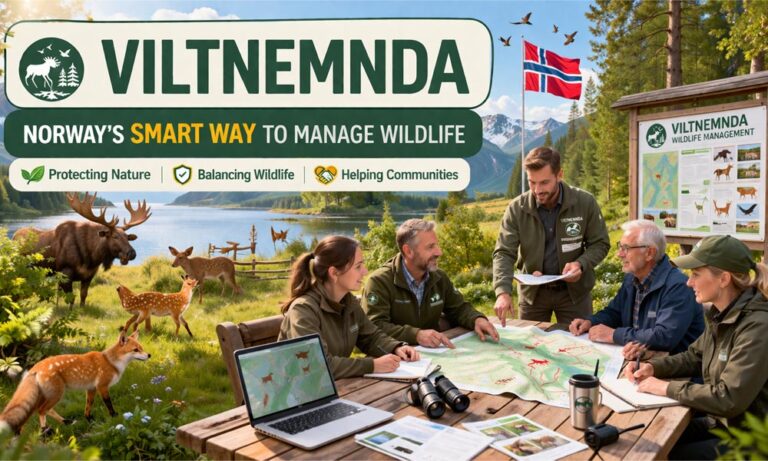
Norway is known for its beautiful forests, mountains, lakes, and open land. These places are home to many wild animals, such as moose, deer, roe deer, foxes, birds, and even large predators in some areas. Nature is a big part of daily life in Norway. But when people, roads, farms, and animals all share the same space, problems can happen.
Think about a moose crossing a road at night. Or a deer eating crops on a farm. Or a hunting area that needs better rules so animal numbers stay healthy. These are not small issues. They affect safety, nature, and local communities. That is why Norway uses smart local systems to manage wildlife in a careful and balanced way.
One important part of that system is Viltnemnda. Many people see this word on Norwegian town or municipal websites and wonder what it means. Is it a government office? Is it a hunting group? Is it a wildlife team working in forests? The answer is simple, but very important.
In this article, we will make everything easy to understand. You will learn what Viltnemnda means, why it matters, how it works, what laws guide it, who sits in it, and how it helps manage hunting and wildlife in Norway. By the end, you will see why Viltnemnda is such an important part of local wildlife management.
What Is Viltnemnda?
Viltnemnda is a local wildlife committee in Norway. It usually works at the municipal level, which means it is connected to local government. Its job is to help manage wildlife in a practical and responsible way. This includes things like hunting rules, animal population control, local wildlife plans, and wildlife-related problems in the community.
A lot of people think Viltnemnda is a national office or a group of wildlife officers driving around forests every day. But that is usually not the case. In most places, Viltnemnda is more of a local committee that helps make decisions and guide local wildlife work. It is closely tied to the municipality and helps turn national wildlife laws into local action.
You can think of Viltnemnda as a bridge. On one side, there are laws, rules, and environmental goals. On the other side, there are real local issues, like too many moose in one area, damage to farmland, or road accidents with wild animals. Viltnemnda helps connect those two sides in a smart and practical way.
This is what makes Viltnemnda so useful. Wildlife management is not the same everywhere. One area may have many deer. Another may have more moose. One town may deal with road accidents. Another may worry more about crop damage. A local committee can look at local facts and make better local choices.
Viltnemnda Meaning in Simple Words
The word Viltnemnda comes from Norwegian. It may look hard at first, but the meaning is actually very simple. The word “vilt” means wildlife or game animals. The word “nemnda” means committee or board. So together, Viltnemnda means something like wildlife committee or game management committee.
That simple meaning tells you a lot about the role. It is not just a random name. It clearly shows that this is a group connected to wildlife matters. When people search for Viltnemnda, they are often trying to understand whether it deals with animals, hunting, local government, or nature rules. The truth is that it is connected to all of those things.
In plain English, Viltnemnda is a local group that helps manage wildlife and hunting matters in a municipality. It looks at real local issues and supports decisions that keep both people and wildlife safer. It also helps make sure nature is managed in a way that is fair, balanced, and sustainable.
This simple meaning is important because many readers may feel confused by the word at first. Once you break it down, the topic becomes much easier. And when a topic feels easy, readers stay interested and keep reading. That is one reason the meaning section matters so much in an article about Viltnemnda.
Why Viltnemnda Is Important in Norway
Norway has large natural areas, and wildlife is part of daily life in many places. Moose, red deer, roe deer, and other animals move across forests, roads, farms, and mountains. Hunting is also an old and respected tradition in Norway. Because of this, wildlife cannot be left unmanaged. There must be a system that keeps animal numbers healthy and reduces problems between wildlife and people.
This is where Viltnemnda becomes important. Without local wildlife management, some areas could face more road accidents, more crop damage, and more pressure on forests and farmland. At the same time, poor wildlife control could hurt animal populations and damage the balance of nature. So the goal is not just to protect people. It is also to protect wildlife in a smart way.
Let’s imagine a simple example. A local area starts seeing more moose near roads. Drivers become nervous, and accidents begin to rise. Farmers also notice more damage in nearby land. A local body like Viltnemnda can help the municipality respond with better planning, hunting adjustments, and local action. That is much more useful than waiting for one central office far away to handle every small issue.
Another reason Viltnemnda matters is that local people understand local nature best. The mountains in one region are not the same as the forests in another. Wildlife patterns are different too. Norway’s system respects this. Instead of managing everything from one single top office, it gives municipalities a real role. That makes wildlife management more flexible, more realistic, and often more effective.
How Viltnemnda Works at the Local Level
To understand Viltnemnda, it helps to know how local government works in Norway. Municipalities have important responsibilities for local matters, and wildlife is one of them. This means local authorities are not just watching from the side. They are directly involved in wildlife and habitat management inside their own areas.
Viltnemnda helps the municipality handle these duties. In many places, the committee processes wildlife-related cases, gives advice, and may make decisions in matters that the municipal council has delegated to it. That means the local council gives the committee power to handle certain wildlife issues in a practical way.
This local role is very important. National laws may set the big rules, but those rules still need to be used in real local situations. For example, a municipality may need a plan for moose numbers, deer hunting, or reducing wildlife-vehicle crashes. Viltnemnda helps turn broad laws into local action that fits the area’s actual needs.
It also helps bring together different voices. Hunters, landowners, farmers, local officials, and wildlife experts may all have useful knowledge. One person may know where animals move in winter. Another may know which roads are most dangerous. Another may understand hunting pressure in the area. Viltnemnda helps collect these views and shape better local choices.
That is one of the smartest things about the system. It does not treat wildlife management as something separate from daily life. Instead, it connects nature, law, roads, farms, safety, and local knowledge into one working system.
Viltnemnda and Norway’s Wildlife Laws
Even though Viltnemnda works locally, it does not make its own laws. It works under Norwegian law. This is a very important point. The committee follows national rules and applies them at the local level. So when people ask what legal power Viltnemnda has, the best answer is this: it works within laws made by the Norwegian state and within authority given by the municipality.
One key law is the Nature Diversity Act, called naturmangfoldloven in Norwegian. This law focuses on biodiversity, ecosystems, and natural balance. It says nature should be managed in a way that protects both today’s needs and the future. In simple words, it means people cannot just think about short-term gains. They must also think about long-term health for wildlife and habitats.
Another major law is the Wildlife Act, known as viltloven. This law has long been central to wildlife management and hunting in Norway. It deals with how wildlife and habitats should be managed, and it has guided hunting rules, wildlife population control, and related issues for many years. When local committees work with hunting plans and wildlife cases, this law has been one of the main legal foundations.
There is also an important update that makes the topic feel very current in 2026. A newer law called viltressursloven was adopted in 2025 and is expected to replace the older viltloven from July 1, 2026. This is important because it shows that wildlife management in Norway is still developing. The new law aims to modernize the system and make responsibilities clearer for local authorities and wildlife bodies.
So when we talk about Viltnemnda today, we are talking about a system that stands between older traditions and newer legal changes. That makes it even more interesting. It is not a frozen system. It is something that continues to grow, adapt, and improve as Norway updates its wildlife laws.
Who Sits in Viltnemnda?
The people inside Viltnemnda can vary from one municipality to another. That is because local government systems in Norway have some flexibility. Still, in most cases, Viltnemnda is made up of appointed members and deputy members who serve for a set period. These members are usually chosen through the municipality.
The group often includes people with different kinds of local knowledge. This may include local officials, hunters, landowners, people with farming experience, or people with a strong interest in nature and wildlife. The idea is to create a committee that can understand wildlife not only from one angle, but from many sides.
This mix matters a lot. For example, a hunter may understand animal movement and hunting pressure. A farmer may understand crop damage and land use. A local official may understand the legal and political side. When these views come together, the decisions can become more balanced and more useful for the whole community.
It is also important to know what Viltnemnda usually is not. It is usually not the same as the field teams that go out to search for injured animals after accidents. In many places, those field teams are separate and may be called ettersøkspersonell, which means search personnel. These people do practical fieldwork. Viltnemnda, by contrast, is more focused on planning, management, decisions, and local policy.
So if you picture Viltnemnda, do not only imagine people in forest gear. Think of it more as a local decision-making group with wildlife knowledge, community links, and public responsibility.
Main Jobs of Viltnemnda
Many people think Viltnemnda only deals with hunting. But its job is actually much broader than that. It works with several parts of local wildlife management, and many of those parts affect normal daily life more than people realize.
One of its main jobs is to support or make decisions in local wildlife matters that the municipality gives it responsibility for. This may include wildlife management plans, statements on local wildlife issues, and decisions about how local wildlife goals should be reached. In short, Viltnemnda helps shape how wildlife is managed in the municipality.
Another big part of the job is managing deer species, often called hjorteviltforvaltning in Norwegian. This includes animals such as moose, red deer, and roe deer. The committee may work with local management goals, population size targets, and hunting plans that help keep animal numbers healthy and balanced. This is important because too many animals can damage forests, fields, and road safety, while too few can hurt nature balance and local hunting traditions.
Viltnemnda is also linked to the local wildlife fund, often called the viltfond. This fund is built from hunting-related fees and can help support wildlife work in the municipality. The money may be used for habitat work, local wildlife measures, research support, or costs connected to injured and dead wild animals. This financial side is not always discussed in simple articles, but it is a real and practical part of wildlife management.
The committee may also be connected to systems for handling injured wildlife and dead wildlife after accidents. It may help organize or support local follow-up. It often cooperates with neighboring municipalities and other authorities as well. So the work of Viltnemnda reaches into planning, funding, hunting, safety, and local nature care all at once.
Viltnemnda and Hunting Rules in Norway
Hunting is one of the most searched parts of the Viltnemnda topic. That makes sense, because hunting and wildlife management are closely linked in Norway. But it is important to explain this in a clear way. Hunting in Norway is not meant to be random. It is carefully regulated so wildlife populations stay healthy and nature stays balanced.
Viltnemnda is involved in local systems connected to hunting management, especially for large game animals such as moose and deer. This may include local goals, hunting plans, quotas, and cooperation with hunting areas. The idea is not simply to allow hunting. The real goal is to use hunting as one tool in a larger wildlife management system.
Let’s make that easier to picture. Imagine a municipality where deer numbers grow too high. If nothing changes, the area may face more road accidents, more damage to young forests, and more trouble for nearby farms. In that case, local hunting rules and quotas can help bring the population back to a healthier level. That is why hunting is not separate from conservation. In Norway, it is often part of conservation.
Ethical hunting also matters. Good wildlife management is not just about numbers. It is also about respect for animals, proper rules, and humane practices. Seasons, quotas, and standards all help make sure hunting is done in a responsible way. Viltnemnda helps support this balance between nature, safety, tradition, and sustainability.
How Viltnemnda Handles Wildlife Problems
So far, we have seen that Viltnemnda helps manage wildlife in a smart and local way. But what happens when real problems show up? This is where the work becomes very practical. Wildlife issues are not only about laws or hunting plans. They are also about daily life. A farmer may lose crops. A driver may hit a deer. A family may worry about animals coming too close to homes or roads.
These problems are often called human-wildlife conflicts. That may sound like a big term, but the idea is simple. It means there is a clash between what people need and what animals do naturally. Animals move to find food, shelter, and safe paths. But roads, farms, houses, and towns are now part of that same space. So conflicts can happen more often than before.
Viltnemnda helps the municipality respond in a balanced way. It does not treat every animal as a danger, and it does not ignore people’s concerns either. Instead, it looks at local facts and tries to find practical answers. In some places, this may mean stronger local planning. In others, it may mean better fences, more public information, or changes in hunting goals.
For example, if deer keep eating crops in one area, the answer may not be just one thing. The municipality may need better land planning, support for farmers, and changes in wildlife management. If moose are often seen near a busy road, local action may focus on reducing accident risk. Viltnemnda helps connect these problems with real solutions. That is one reason this local system works so well.
Viltnemnda, Roadkill, and Injured Animals
One of the most visible parts of wildlife management in Norway is what happens after road accidents with animals. These accidents are a serious issue, especially in places where large animals like moose and deer move near roads. A single crash can be very dangerous for both people and animals. This is not just a wildlife issue. It is also a public safety issue.
When an animal is hit by a car, the situation must be handled quickly and carefully. In many municipalities, there are local systems for this. Search teams may be called to track injured animals, and trained people may follow up after the police are informed. This work is often linked to municipal responsibility, and Viltnemnda may be connected to how the local system is organized and supported.
It is important to remember that Viltnemnda is usually not the team doing the field search itself. That work is often done by separate search personnel, known as ettersøkspersonell. These are trained people who go out, track the animal, and make sure it is handled in a humane way. Still, the local wildlife system that supports this work is part of the bigger picture that Viltnemnda helps shape.
In 2026, this work is still very important, and it may become even more modern over time. New tools, such as drones and better tracking methods, may support search work in the future. But the main goal stays the same. Injured animals should not suffer for longer than necessary, and dangerous situations near roads should be handled in a safe and professional way. This is another way Viltnemnda helps protect both wildlife and people.
Viltnemnda and the Wildlife Fund
Many people do not realize that local wildlife management also has a money side. Good wildlife work needs support. Equipment costs money. Habitat work costs money. Search systems cost money. Public information and local planning also need funding. This is where the municipal wildlife fund becomes important.
In Norway, this local fund is often called the viltfond. It is mainly financed through hunting-related fees. That means hunters help support the local wildlife system through payments that go into this fund. The money is then used for wildlife management work in the municipality, according to the rules that guide the fund.
This can include many useful things. The fund may help pay for local habitat improvement. It may support wildlife monitoring. It may help cover costs related to injured or dead wildlife after accidents. It may also support projects that improve local wildlife knowledge and management. In some municipalities, Viltnemnda may help decide how this money is used, or it may give advice on local priorities.
This part of the system is easy to overlook, but it is very important. Without funding, even the best wildlife plans stay on paper. The wildlife fund helps turn plans into action. It gives the local system real power to do useful work. So when people ask what Viltnemnda does, this financial side is also part of the answer.
Viltnemnda and the Local Community
Wildlife management is not only about animals. It is also about people. That is why the local community matters so much. Viltnemnda is important because it sits close to the people who actually live with wildlife every day. Farmers, hunters, drivers, landowners, and local families all feel the effects of wildlife decisions in different ways.
Think about a farmer whose field is damaged by deer. Think about a hunter who wants wildlife numbers to stay healthy for the future. Think about a parent worried about moose near a school road. These people do not all see wildlife in the same way. But all of them have something useful to say. A local system works better when these voices are heard.
This is one reason Viltnemnda has real value. It connects wildlife policy with daily local life. It gives a place for local knowledge, local concerns, and local responsibility. In many places, public trust grows when people feel that decisions are being made close to home, not far away by people who do not know the area.
Community involvement can also improve results. Local people may know where animals cross roads most often. They may know when crop damage gets worse. They may know how hunting pressure has changed over time. This kind of everyday knowledge is very useful. Viltnemnda helps bring that knowledge into local wildlife work in a practical way.
Viltnemnda and Other Wildlife Authorities
Even though Viltnemnda is important, it does not work alone. Wildlife management in Norway has several levels. The municipality has a local role, but there are also regional and national authorities involved. This helps make sure local action fits within bigger national rules and environmental goals.
At the local level, the municipality is the main public body responsible for wildlife matters in its own area. Viltnemnda helps the municipality carry out this work. At the regional level, there is Statsforvalteren, which helps oversee environmental law and checks that municipalities follow national rules. At the national level, agencies such as Miljødirektoratet create wider policies, regulations, and guidance.
This system creates a useful balance. Local committees understand local nature and local needs. Regional and national authorities help keep the system fair and consistent across the country. That means one municipality does not work in a completely separate way from another. There is still a larger legal and policy framework holding everything together.
This also matters because not every wildlife issue is handled at the same level. Some matters stay very local, such as certain hunting plans or local wildlife goals. Other matters may involve higher authorities, especially when the issue is more sensitive or broader in scale. So Viltnemnda is a key part of the system, but it is still one part of a bigger network.
Viltnemnda vs Rovviltnemnda
Many people mix up Viltnemnda and Rovviltnemnda because both names deal with wildlife. But they are not the same. Understanding the difference is very helpful, especially for readers who are new to Norwegian wildlife systems.
Viltnemnda usually works at the municipal level and deals with general local wildlife management. This can include hunting administration, deer population issues, roadkill follow-up, local goals, and wildlife-related problems in the community. It is closely tied to the municipality and local conditions.
Rovviltnemnda, on the other hand, is a regional body connected more specifically to large predators. That includes animals such as wolves, bears, lynx, and wolverines. Predator management is handled at a higher level because it often involves wider conservation goals, bigger public debates, and more complex rules across regions.
A simple way to remember it is this: Viltnemnda is mainly about local wildlife management in general, while Rovviltnemnda is about regional predator management. Once readers understand this, a lot of confusion disappears. And that makes the whole topic much easier to follow.
Big Challenges Facing Viltnemnda Today
Wildlife management is not getting easier. In many ways, it is becoming more complex. This means Viltnemnda and local authorities face new pressures in 2026 and beyond. The old idea of simply counting animals and setting hunting rules is no longer enough on its own. Today, wildlife management also has to respond to land use changes, road expansion, climate shifts, and stronger public debate.
One big challenge is habitat pressure. As roads, housing, and other development spread, animal habitats become smaller or more broken up. This can push animals closer to farms, roads, and towns. When that happens, the number of conflicts may rise. Wildlife-vehicle collisions are also still a major concern, especially with large animals in some areas.
Another challenge is balancing different opinions. Hunters, farmers, landowners, conservation groups, and local residents may all want different things. One group may want stronger population control. Another may want more protection. Another may focus on road safety. Viltnemnda must listen to many sides and help find a balance, and that is not always easy.
There is also the legal transition now happening in Norway. As the older viltloven gives way to the newer viltressursloven, local wildlife systems may need to adjust. New expectations around better data, animal welfare, and faster response methods are also shaping the future. So the work of Viltnemnda is becoming more demanding, not less.
The Future of Viltnemnda in Norway
Even with these challenges, the future of Viltnemnda still looks important and strong. Norway continues to rely on local wildlife administration because local nature is different from place to place. A mountain area has different wildlife needs than a farming area. A forest municipality may face different issues than a coastal one. Local knowledge will still matter in the years ahead.
At the same time, wildlife management is becoming more modern. Better data systems can help local committees make more accurate decisions. GPS tracking can show how animals move. Drones may support surveys or search work. Digital tools can help track roadkill patterns and population changes. These tools do not replace local knowledge, but they can make local work stronger.
The future will likely bring more cooperation too. Municipalities may work more closely with each other. Regional and national authorities may share better tools and guidance. Research institutions may provide more useful data that local systems can apply in real life. This can help make wildlife management more flexible, faster, and smarter.
But even with more technology, the heart of the system stays the same. Viltnemnda is about practical local action. It is about taking national goals and turning them into useful choices on the ground. That is why this local model still matters so much. It helps Norway manage wildlife in a way that is both modern and close to real life.
Conclusion
So, what is the big picture? Viltnemnda is a local wildlife committee that helps Norway manage wildlife in a smart, balanced, and practical way. It connects law, nature, hunting, safety, and local knowledge. It helps municipalities respond to real problems while also protecting the long-term health of wildlife and habitats.
Its role is wider than many people first think. It is not just about hunting permits or simple animal control. Viltnemnda is tied to local planning, population management, wildlife funds, injured animal follow-up, and the bigger goal of making sure people and wildlife can share space in a safer way. That is why it remains such an important part of Norwegian wildlife management.
In 2026, this topic matters even more because wildlife systems are changing. New legal updates, better tools, and new environmental pressures are shaping the future. But one thing stays clear. Local knowledge and local responsibility are still very powerful. They help turn broad rules into practical action that fits each place.
That is what makes Viltnemnda such a strong example. It shows that wildlife management works best when it is careful, local, informed, and connected to the people who live closest to nature. Norway’s system is not only about protecting animals. It is about building a better balance between wildlife, land, and community for the future.
(FAQs)
What is Viltnemnda in Norway?
Viltnemnda is a local wildlife committee in a Norwegian municipality. It helps manage wild animals, supports hunting rules, and deals with problems between wildlife and people. In simple words, it is a local public body that helps keep nature, animals, and community life in balance.
It is important because wildlife management in Norway is not done only by the central government. Local areas also have a big role, and Viltnemnda helps turn national wildlife law into local action.
What does Viltnemnda do?
Viltnemnda works with many local wildlife matters. It may help with hunting plans, local population goals for animals like moose and deer, roadkill follow-up, wildlife damage issues, and the use of local wildlife funds. It also helps support safe, fair, and sustainable wildlife management.
Its job is not only about controlling animals. It is also about protecting habitats, reducing conflict, and helping people and wildlife live together in a smarter way.
Is Viltnemnda part of the government?
Yes, Viltnemnda is usually connected to the municipality, which is part of local government in Norway. It is not a private hunting club or an independent wildlife group. It works within public law and usually has authority delegated by the local municipal council.
This means Viltnemnda follows national wildlife rules while also helping solve local wildlife issues in a practical way. It is a local part of Norway’s public wildlife management system.
What is the meaning of the word Viltnemnda?
The word Viltnemnda comes from Norwegian. The word “vilt” means wildlife or game animals, and “nemnda” means committee or board. So the full meaning is basically wildlife committee or game management committee.
This name explains its role very well. It is a local committee that works with wildlife-related matters, especially in connection with hunting, animal populations, habitat issues, and public safety.
How does Viltnemnda help with hunting in Norway?
Viltnemnda helps support local hunting management, especially for large animals such as moose, red deer, and roe deer. It may work with hunting quotas, local wildlife goals, population planning, and management systems that help keep animal numbers balanced.
Hunting in Norway is not meant to be random. It is used as one tool in wildlife management. Viltnemnda helps make sure this is done in a way that protects nature, supports safety, and respects long-term sustainability.
Does Viltnemnda deal with injured animals and roadkill?
Yes, Viltnemnda is often linked to the local system for injured wildlife and animals hit by vehicles. However, it is usually not the field team doing the actual search work. That job is often done by trained local search personnel, called ettersøkspersonell.
Still, Viltnemnda may help support, organize, or guide these systems as part of local wildlife management. This is important because wildlife accidents are a serious issue in many parts of Norway, especially where moose and deer often cross roads.
What laws guide Viltnemnda?
Viltnemnda works under Norwegian wildlife and environmental laws. Two very important laws are the Nature Diversity Act and the older Wildlife Act (Viltloven). These laws guide how wildlife, habitats, and hunting should be managed in a responsible and sustainable way.
There is also an important legal update. A newer law called viltressursloven, adopted in 2025, is expected to replace viltloven from July 1, 2026. This means local wildlife management in Norway is becoming more modern and more clearly structured.
What is the difference between Viltnemnda and Rovviltnemnda?
This is a common question because the names sound similar. Viltnemnda usually works at the municipal level and deals with general local wildlife management. That includes animals like moose, deer, and other local wildlife matters.
Rovviltnemnda is different. It works more with large predators such as wolves, bears, lynx, and wolverines, and it usually operates at a regional level. So, the two bodies are not the same and do not have the same role.
Who can be a member of Viltnemnda?
Members of Viltnemnda are usually appointed by the municipality. They may include local officials, hunters, landowners, farmers, or people with wildlife knowledge and community experience. The exact structure can vary from one municipality to another.
This mix is helpful because wildlife management affects many groups. A committee with different types of local knowledge can make better and more balanced decisions that fit the real needs of the area.
Why is Viltnemnda important for Norway’s future?
Viltnemnda is important because wildlife management is becoming more difficult. Climate change, habitat loss, road traffic, and changing land use all create new pressure on animals and people. A strong local system helps Norway respond to these problems in a practical and flexible way.
It is also important because the future of wildlife management will depend on both local knowledge and modern tools. As Norway moves forward with updated laws and better technology, Viltnemnda will likely stay a key part of protecting biodiversity, public safety, and local nature balance.
You may also read: Studiae: The Smart Way to Learn Better in 2026
