



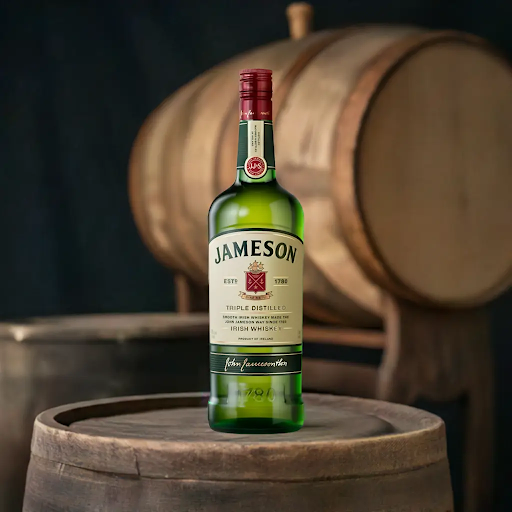
Choosing a whiskey in a larger bottle size can be useful for households, gatherings, and occasions where several servings are expected. However, bottle size is only one factor to consider. The whiskey’s production method, maturation, flavor profile, alcohol strength, and serving style all contribute to the overall experience.
Jameson 1 litre refers to the 1-liter format of Jameson Original Irish Whiskey, a blended Irish whiskey made from a combination of pot still and fine grain whiskeys. According to the producer, Jameson Original is triple distilled and matured in oak casks for a minimum of four years. It has a 40% alcohol-by-volume strength and is known for a smooth profile with spicy, nutty, vanilla, and sweet sherry notes.
What Makes Jameson Original Different?
Jameson Original is an Irish blended whiskey rather than a Scotch whisky or bourbon. Its production combines pot still and fine grain whiskeys, followed by triple distillation. The producer explains that triple distillation is used to create the whiskey’s characteristic smoothness.
The whiskey is produced and matured in Ireland. Its distillation takes place at the Midleton Distillery in County Cork, where Jameson has continued its production tradition. The standard 1-liter product is listed at 40% alcohol by volume.
The larger bottle format does not change the underlying character of the whiskey. Instead, it provides more of the same blend in a 1-liter package. This can make the format practical for people who regularly serve whiskey or use it in mixed drinks.
What Does Jameson 1 Litre Taste Like?
The flavor profile of Jameson 1 litre is designed to be approachable while retaining recognizable whiskey characteristics.
The official tasting description identifies a light floral fragrance with spicy wood and sweet notes on the nose. On the palate, the whiskey combines spicy, nutty, and vanilla flavors with hints of sweet sherry. The finish is described as smooth and lingering.
These characteristics make it relatively versatile. Drinkers who prefer a straightforward whiskey experience can explore the spirit neat or with a small amount of water. Those who prefer longer drinks can combine it with suitable mixers.
The balance between sweetness, spice, and oak is particularly relevant when choosing a whiskey for different serving occasions.
How Is Jameson Made?
Understanding the production process provides useful context for its flavor.
Jameson Original starts with a blend of pot still and fine grain whiskeys. The whiskey is then triple distilled in copper stills. According to Jameson’s official information, the purpose of this additional distillation is to create its signature smoothness. The spirit is subsequently matured in oak casks for a minimum of four years.
Pernod Ricard’s product information similarly identifies Jameson Original as a blend of single pot still and fine grain whiskey and states that it is triple distilled and aged in oak casks for a minimum of four years.
The maturation stage is important because oak casks contribute characteristics that influence the final aroma, flavor, and texture. The combination of distillation and maturation helps create the balance associated with the finished whiskey.
What Is the Alcohol Content?
The standard Jameson Original 1-liter bottle has an alcohol strength of 40% ABV. This is confirmed in product information from Pernod Ricard and retail product specifications.
At 40% ABV, it falls within the common strength range for many standard whiskies and other distilled spirits. The alcohol content should be considered when planning serving sizes, particularly when whiskey is being consumed neat or in cocktails.
Responsible consumption is important, and legal drinking-age requirements vary by jurisdiction.
What Are the Best Ways to Serve It?
One advantage of Jameson 1 litre is its versatility. The producer states that Jameson Original can be enjoyed neat, on the rocks, with a splash of water, or in cocktails. It also specifically highlights combinations involving ginger ale and lime.
For a neat serving, a small amount can be poured into an appropriate whiskey glass and allowed to rest briefly before tasting. This gives the drinker an opportunity to assess its aroma before taking a sip.
Adding a little water can alter the whiskey’s aroma and palate, making certain flavors more noticeable. Ice, meanwhile, lowers the temperature and gradually dilutes the whiskey as it melts.
For mixed drinks, the whiskey’s combination of vanilla, spice, sweetness, and oak can work with ingredients that complement rather than overpower those characteristics.
Why Is a 1-Liter Bottle Format Useful?
Bottle size can influence how a spirit fits into different consumption patterns. A 1-liter bottle contains more whiskey than a standard 700ml or 750ml bottle, making it particularly practical when several servings are expected.
For households that occasionally entertain guests, the larger format can reduce the frequency of replacing a bottle. It can also be useful for preparing cocktails where whiskey is one of several ingredients.
However, bottle size should not be confused with quality. A larger bottle contains more of the same product; it does not inherently indicate a different grade or flavor profile.
When comparing products, consumers should check the exact expression, bottle size, alcohol content, production details, and storage information.
How Does It Compare With Other Spirits?
Whiskey and rum offer distinctly different production traditions and flavor profiles. Irish whiskey is generally produced from cereal-based mash and matured in wooden casks, while rum is made from sugarcane-derived materials such as molasses or sugarcane juice.
For example, Bacardi 1 litre may refer to a larger-format bottle of a particular Bacardi rum expression, but consumers should check the exact product because Bacardi offers multiple rum varieties with different flavor profiles and strengths. Bacardi’s official nutritional information lists several products, including Superior and Gold at 40% ABV, while other expressions have different alcohol levels.
This illustrates why comparing spirits by bottle size alone can be misleading. The underlying spirit category, production process, maturation, and specific expression are more useful comparison points.
How Should a 1-Liter Whiskey Bottle Be Stored?
Whiskey should generally be stored upright in a cool, relatively stable environment away from direct sunlight and significant temperature fluctuations.
Unlike wine, spirits do not need to be stored horizontally. Keeping a whiskey bottle upright limits prolonged contact between the alcohol and the closure, which can be useful for maintaining the bottle over time.
Once opened, minimizing unnecessary exposure to air can help preserve its characteristics. Keeping the closure securely fitted is therefore important.
The storage area should also be kept away from excessive heat and direct sunlight, as prolonged exposure to unsuitable conditions can affect the contents and packaging.
The larger format can be practical for sharing, occasional entertaining, or preparing cocktails, while its 40% ABV places it within the standard strength range for many traditional whiskies. Consumers shopping from RV Drinks should focus on the exact expression, bottle volume, alcohol strength, and product details rather than relying on bottle size alone.
What Should You Check Before Buying?
When purchasing a larger bottle of whiskey, consumers should verify the exact product and packaging details. Important information includes:
- Product expression
- Bottle volume
- Alcohol strength
- Country of production
- Producer details
- Packaging condition
- Applicable age restrictions
- Storage recommendations
- Seller information
The 1-liter Jameson Original specification identifies Ireland as the country of origin and Midleton Distillery in County Cork as the manufacturer location, with a 40% alcohol level.
Checking the label against the product listing can also help prevent confusion between different Jameson expressions that may have similar names but different maturation or flavor characteristics.
Conclusion
Jameson 1 litre offers the familiar characteristics of Jameson Original in a larger bottle format. Its identity comes from its blend of pot still and fine grain whiskeys, triple-distillation process, oak maturation, and balanced combination of floral, spicy, nutty, vanilla, and sweet sherry notes. For shoppers comparing whiskey with rum, Bacardi 1 litre represents a different spirit category and should be evaluated according to its specific expression, ingredients, maturation, flavor profile, and alcohol content. Overall, understanding production, tasting characteristics, serving options, and bottle specifications provides a more useful basis for evaluating a whiskey than size or price alone.
