



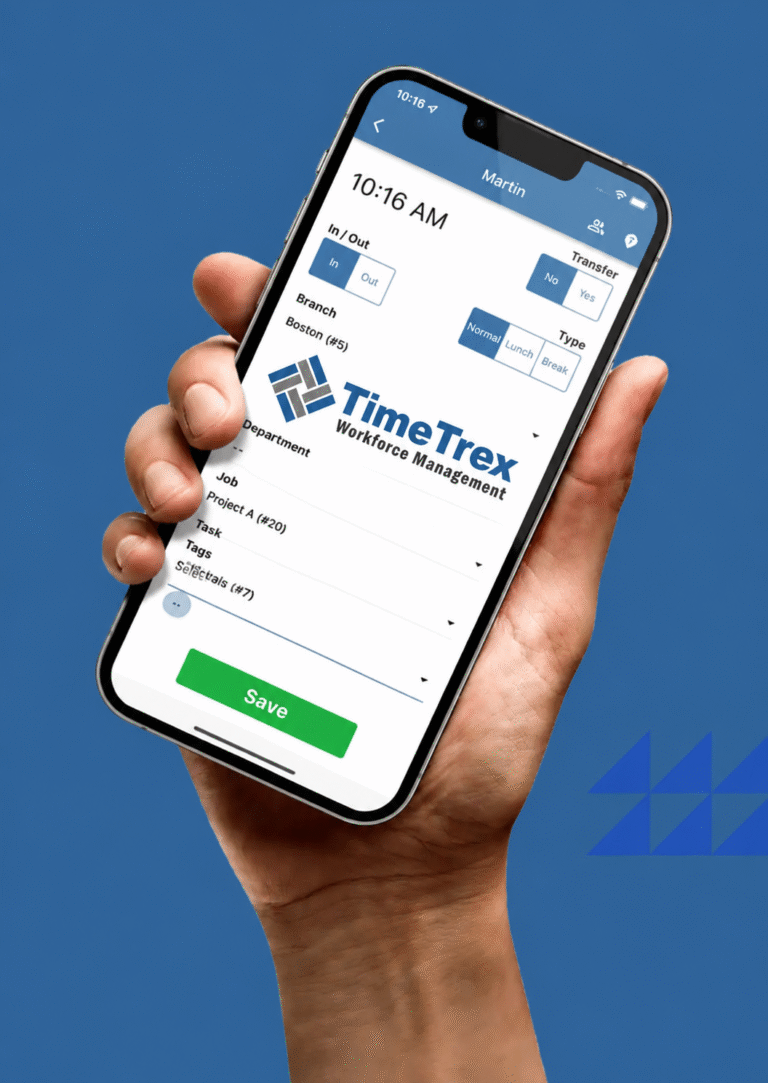
Payroll mistakes rarely announce themselves loudly. They show up quietly, as a slightly wrong paycheck, an overtime calculation nobody double-checked, or a timesheet that got approved without anyone noticing a missing punch. Individually, these look small. Added up over a year across an entire team, they can quietly cost a business thousands of dollars, not to mention the trust they chip away at when an employee’s pay does not match the hours they actually worked.
The root cause is almost always the same. Somewhere in the process, time data and payroll data are living in two different places, and someone has to manually bridge the gap between them. Every manual step is another chance for an error to slip through.
Where Payroll Accuracy Usually Breaks Down
Most payroll errors do not come from complicated edge cases. They come from ordinary, everyday friction points that build up over time:
- Timesheets that get approved without a manager actually reviewing the hours
- Overtime that is calculated manually and miscounted, especially across split shifts
- Paid time off and sick leave that is tracked separately from regular hours
- Data re-entered by hand between a time clock system and payroll software
- Missing punches that get guessed at instead of verified
Each of these is a small crack, but payroll only needs one crack to produce a paycheck that is wrong.
This is exactly why so many businesses are moving toward integrated payroll time tracking systems, where the hours an employee actually works flow directly into payroll calculations instead of being copied over by hand.
What Accurate Time Tracking Actually Fixes
When time tracking and payroll share the same system, a lot of the usual error points simply disappear. Overtime is calculated automatically based on real clocked hours, not a manager’s mental math. Paid time off balances update the moment a request is approved, so there is no separate spreadsheet to keep in sync. And because every punch is timestamped and stored, there is no guessing involved when a timesheet looks unusual. Managers can see exactly what happened and approve it with confidence instead of assuming it is probably fine.
The Compliance Angle Nobody Wants to Deal With
Beyond the day-to-day accuracy benefits, there is a quieter reason accurate time tracking matters: compliance. If a wage question or labor audit ever comes up, having a clean, timestamped record of every employee’s hours is the difference between resolving it in an afternoon and spending weeks trying to reconstruct old paper timesheets. Businesses that treat accurate timekeeping as a routine part of operations rarely find themselves scrambling when this happens.
Faster Payroll, Fewer Headaches
There is also a simple time-saving argument here. Payroll administrators who no longer have to manually cross-check timesheets against a separate system get their pay periods done faster, with far less back and forth chasing down missing approvals or unclear entries.
A connected workforce management software platform ties scheduling, attendance, and payroll together so that by the time a pay period closes, the numbers are already accurate and ready to process, rather than something that needs to be pieced together at the last minute.
Payroll accuracy is not really about chasing perfection. It is about removing the small manual steps where mistakes tend to creep in. Businesses that make that shift usually notice the difference almost immediately, in fewer pay disputes, fewer corrections after the fact, and a payroll process that finally feels like it is under control instead of something to dread every pay period.
Why Employees Notice the Difference Too
It is easy to think of payroll accuracy as purely a back-office concern, but employees feel the effects directly. A paycheck that is short by even a few dollars, or an overtime hour that never got counted, tends to stick in someone’s mind far longer than the dollar amount would suggest. It signals that the hours they put in are not being tracked carefully, and that kind of doubt is hard to undo once it sets in.
On the other hand, when pay is consistently accurate and employees can see their hours reflected correctly, it builds a quiet kind of trust that does not require any extra effort to maintain. Fewer questions land in the payroll inbox, fewer employees feel the need to double check their own math against their paycheck, and managers spend less time explaining discrepancies that should never have happened in the first place.
Bringing It All Together
Getting payroll right consistently is less about finding one perfect tool and more about closing the small gaps where errors sneak in, whether that is a manual overtime calculation, a re-typed timesheet, or a leave balance tracked in a separate spreadsheet. When time tracking, scheduling, and payroll all pull from the same accurate data, most of those gaps disappear on their own. For growing businesses in particular, that kind of reliability is worth far more than the time it takes to set up.
