



For SaaS companies operating in the US market, lead capture is rarely a single decision. It is a series of tradeoffs involving user experience, conversion intent, technical implementation, and how well a given format fits within a product’s actual workflow. Two formats have dominated this conversation for years: the popup and the embedded form. Both are widely used, both have measurable track records, and both continue to divide product and marketing teams who are trying to improve acquisition without degrading the experience that brought users to their product in the first place.
What has changed heading into 2025 is not the existence of these formats, but the context in which they are being evaluated. Buyer expectations around digital friction have shifted. Users are more deliberate about where they give their attention, and SaaS products are under more pressure to justify every interruption in the user journey. That shift makes the choice between a popup and an embedded form more consequential than it may appear on the surface.
What Each Format Actually Does in a SaaS Context
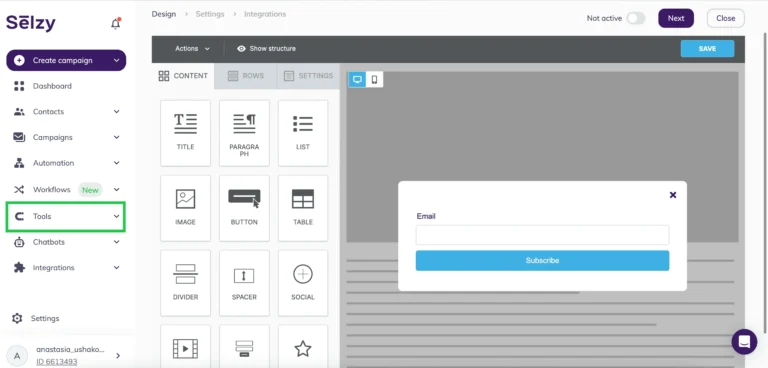
A view popup is a form element that appears over existing page content in response to a trigger — time on page, scroll depth, exit intent, or a specific user action. It is designed to interrupt the natural flow of a session and direct attention to a single prompt. When implemented thoughtfully, it captures intent at a moment of relevance. When implemented poorly, it creates friction that users associate with the product itself. The distinction between those two outcomes depends almost entirely on timing and context, not on the format alone. For teams looking to understand how a view popup functions in a practical deployment environment, there are configuration-level resources that explain how trigger conditions and display logic affect conversion behavior.
An embedded form, by contrast, sits within the page layout as a permanent fixture. It does not interrupt. It is visible only to users who reach the section of the page where it lives, which means its exposure is tied directly to scroll behavior and engagement depth. The embedded form rewards users who are already engaged enough to read through content. It asks nothing of users who are not.
The Behavioral Difference Between the Two Formats
The core distinction between these formats is not aesthetic — it is behavioral. A popup introduces a decision point into the user experience at a moment the system chooses. An embedded form presents an option at a moment the user reaches through their own navigation. That difference in agency matters, particularly in B2B SaaS environments where the person evaluating a product is often a decision-maker who is already managing a complex evaluation process and has little tolerance for unsolicited interruption.
In consumer-facing SaaS products, where session intent is more varied and users may be browsing without a defined goal, the popup’s ability to capture attention at a specific moment can work in its favor. In B2B contexts, the same mechanism often reads as a pressure tactic rather than a helpful prompt. Understanding which user type dominates a given product’s acquisition funnel is a prerequisite to choosing between these formats — not a secondary consideration.
Conversion Rate Data and What It Actually Reflects
Conversion rate benchmarks for popups consistently show higher raw numbers than embedded forms across most categories. This is a reasonable observation, but it requires careful interpretation. A popup that captures an email address from a user who immediately unsubscribes or never engages further has technically converted at the form level. Whether that represents a meaningful outcome for the business depends on what happens downstream in the funnel, and that context is often absent from the data used to justify popup usage.
Embedded forms, while typically showing lower raw conversion rates, tend to produce leads with stronger intent signals. The user who fills out a form embedded at the bottom of a detailed feature comparison page has already consumed a significant amount of information. They have made a choice to act without being prompted. That behavioral context is not captured in a conversion rate, but it is often reflected in downstream metrics like trial activation rates, product qualified lead scores, and eventual revenue per lead.
Where Popup Conversion Rates Are Overstated
The conditions under which popup conversion data is collected vary significantly across studies and case reports. Many published benchmarks aggregate data from e-commerce and media sites alongside SaaS products, which introduces meaningful noise. A popup offering a discount code on a retail site and a popup requesting a trial signup on a SaaS pricing page are responding to fundamentally different user intents, but they are often treated as comparable in conversion discussions.
Additionally, conversion rate calculations for popups sometimes count dismissals that include accidental form submissions or users who submitted and immediately requested data removal. In a regulatory environment shaped by the California Consumer Privacy Act and other state-level privacy frameworks, the quality of consent associated with a popup submission is also a real operational consideration, not just a philosophical one.
Where Embedded Forms Underperform Expectation
Embedded forms fail when they are placed in locations that users rarely reach. A form embedded below the fold on a page with low engagement depth will simply not be seen by most visitors, regardless of how relevant or well-written it is. This is a placement problem, not a format problem, but it consistently produces data that leads teams to underestimate the embedded form’s actual potential.
Embedded forms also require more deliberate page architecture than popups. They depend on the surrounding content to build the case for conversion, which means that weak content above the form directly suppresses its performance. For teams that have not invested in content development, an embedded form will appear to underperform — but the root cause is the content strategy, not the format itself.
How US SaaS Brands Are Using Both in 2025
Increasingly, experienced SaaS growth teams are not choosing one format over the other — they are sequencing them based on user segment and session behavior. A user arriving from a paid search campaign with high intent signals might reach an embedded form on a well-optimized landing page. A user who has been browsing a knowledge base for several minutes might encounter a contextually relevant popup offering a relevant resource or trial prompt. The format is treated as a variable in the experience design, not a fixed decision made once at the platform level.
This approach requires more sophisticated tracking and segmentation than a single-format strategy, but it more accurately reflects how different users actually move through a SaaS acquisition funnel. According to the Nielsen Norman Group, a research organization that studies digital user behavior, users respond meaningfully differently to interruptions based on their task state — a finding that maps directly onto the popup versus embedded form decision when applied to SaaS product experiences.
The Role of Exit Intent and Behavioral Triggers
One area where popups continue to demonstrate clear value for US SaaS brands is exit intent. A user who is about to leave a pricing page without converting represents a specific and recoverable moment, and a well-timed popup at that point introduces a prompt that would not otherwise exist. The user’s intent to leave means the interruption carries relatively low additional cost to the experience — the session was already ending.
Behavioral triggers more broadly — scroll depth thresholds, idle time detection, specific button interactions — allow popup logic to become more precise than it was even two or three years ago. The concern about popups being disruptive is most valid when they fire indiscriminately. Trigger-based configurations significantly reduce that risk and move the popup format closer to the relevance standard that embedded forms meet by default.
Mobile Behavior and Format Compatibility
Mobile sessions account for a significant and growing share of SaaS website traffic in the US, and both formats behave differently on mobile than on desktop. Popups on mobile can consume the entire viewport, which amplifies their interruption effect and reduces the tolerance threshold for users who encounter them. Google’s mobile-first indexing policies also place restrictions on certain popup implementations, which is a technical constraint that product teams need to account for separately from the conversion discussion.
Embedded forms translate more cleanly to mobile layouts when the surrounding page is responsive by design. They scale with the content, remain accessible without blocking navigation, and do not require the additional dismiss interaction that popups demand on touchscreen devices. For SaaS brands whose acquisition traffic skews mobile, this is a practical consideration that can override the conversion rate comparison entirely.
Making the Right Format Decision for Your Acquisition Model
The view popup versus embedded form debate does not have a universal answer, and any framework that suggests otherwise is oversimplifying the decision. The right format depends on user intent, session context, content quality, traffic source, and the downstream behavior that the business actually needs to optimize for. Raw conversion rate comparisons are a starting point, not a conclusion.
What is clear for US SaaS brands operating in 2025 is that format choice is increasingly being treated as a design decision rather than a marketing preference. Product teams, growth teams, and UX practitioners are involved in these discussions in ways that were less common even a few years ago. That shift reflects a broader understanding that acquisition experience and product experience are not separate concerns — they are part of the same relationship with the user, and inconsistency between them carries a real cost.
Conclusion
Neither the popup nor the embedded form is inherently superior for SaaS conversion. Each format has conditions under which it performs well and conditions under which it fails. The popup captures attention at a chosen moment but requires precise trigger logic and user segmentation to avoid creating friction that reflects poorly on the product. The embedded form captures intent from users who are already engaged but depends heavily on content quality and page architecture to perform at its potential.
For US SaaS brands evaluating this decision in 2025, the most durable approach is to treat format as a context-dependent variable rather than a fixed platform setting. Understand who is arriving, what they already know, where they are in the evaluation process, and what a conversion at that moment is actually worth downstream. With that foundation in place, the choice between a popup and an embedded form becomes a reasoned, adjustable decision — not a debate with a predetermined winner.
