



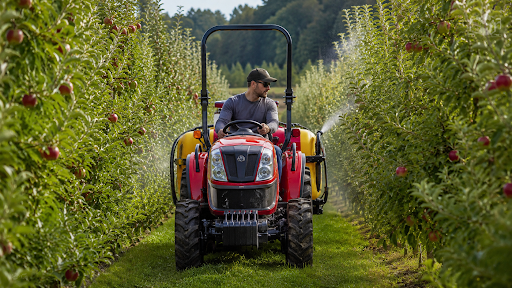
Agriculture has changed significantly over the years, but tractors remain one of the most important machines on a farm. They reduce physical labor, improve working speed, and help farmers complete demanding tasks with greater accuracy. From preparing fields to transporting harvested crops, a properly selected tractor can support almost every stage of agricultural production.
However, choosing a tractor requires more than selecting a machine with an attractive design or a high horsepower figure. Farmers, equipment dealers, and agricultural businesses should work with a dependable tractor manufacturer that understands different farming conditions, equipment requirements, and operational challenges. The right supplier can make it easier to select a tractor that matches the land, implements, workload, and long-term goals of the buyer.
Understand the Main Purpose of the Tractor
Before comparing tractor models, buyers should clearly identify the work the machine will perform. A tractor used mainly for orchard maintenance will have different requirements from one used for large-scale plowing or heavy transportation.
Some farms need one versatile tractor for several jobs, while others use specialized machines for different operations. Common tractor duties include soil cultivation, planting, mowing, spraying, fertilizer application, crop transportation, and material handling.
Creating a list of regular tasks helps determine the power, size, transmission, hydraulic capacity, and attachments that will be required. It also reduces the risk of purchasing a machine that is either too small or unnecessarily powerful.
Match Tractor Size to the Farm
Farm size is an important factor, but it should not be considered alone. Two farms covering the same area may have completely different tractor needs because of their crops, soil, terrain, and working methods.
Compact tractors can be suitable for gardens, greenhouses, orchards, livestock areas, and smaller properties. They are generally easier to operate in narrow spaces and often consume less fuel during light work.
Medium-sized tractors are useful for mixed farming operations. They can perform cultivation, planting, mowing, trailer work, and many other routine activities.
Larger tractors are designed for wide fields, heavy implements, deep cultivation, and long working hours. They can cover more land quickly, but they may also require greater investment, additional fuel, and more storage space.
Select Horsepower Carefully
Horsepower is one of the first specifications buyers notice, but choosing the highest number is not always the best approach. The tractor should have enough power to handle its regular workload without operating under constant strain.
The required horsepower depends on several factors:
- The size and weight of the implement
- The depth of soil cultivation
- The type and condition of the soil
- The working speed
- The slope of the land
- The amount of work completed each day
A tractor that lacks sufficient power may experience wheel slip, overheating, poor performance, and higher mechanical wear. On the other hand, an oversized tractor may increase fuel costs and soil compaction without providing meaningful benefits.
A small reserve of power is often useful, particularly when the tractor will operate different attachments or work in difficult conditions.
Check Implement Compatibility
A tractor cannot be evaluated separately from the tools and implements it will operate. Buyers should confirm that the tractor is compatible with current equipment and any machinery they may purchase in the future.
Important areas to check include hitch type, lifting capacity, power take-off speed, hydraulic flow, electrical connections, and tractor weight. An implement that is too heavy can affect steering and stability, while insufficient hydraulic capacity may prevent it from operating correctly.
Farmers should also consider whether the tractor can work with plows, seeders, rotary tillers, mowers, sprayers, trailers, loaders, and harvesting equipment.
Choosing compatible machinery creates a more efficient farming system and prevents the cost and inconvenience of making unnecessary equipment changes later.
Consider the Soil and Terrain
Field conditions have a direct effect on tractor performance. Light and dry soil is generally easier to cultivate than wet or heavy clay. Uneven ground, steep slopes, and soft fields may require additional traction, stability, and braking control.
Four-wheel-drive tractors can provide better traction in muddy fields, loose soil, and sloping areas. They can also reduce wheel slip during demanding cultivation. However, farms that mainly operate on flat and firm land may not always require the same level of traction.
Tire selection is equally important. Agricultural tires should provide grip without causing excessive soil damage. Tire width, tread pattern, and pressure can influence traction, fuel efficiency, and soil compaction.
Correct ballast distribution also helps improve stability and pulling performance. Too little weight can cause wheel slip, while too much weight can increase fuel use and unnecessary pressure on the soil.
Choose a Suitable Transmission
The transmission affects how easily the tractor changes speed and direction. A simple manual transmission may be suitable for basic fieldwork and transportation, especially when operating costs and easy maintenance are priorities.
Tractors with a wider range of gears can provide better speed control for planting, spraying, cultivation, and other precise operations. Loader work often benefits from a transmission that allows quick forward and reverse movement.
The operator’s experience should also be considered. A tractor that is easy to control can improve productivity and reduce fatigue, particularly when several workers use the same machine.
The ideal transmission should provide practical speed options, reliable performance, and controls that match the farm’s daily operations.
Evaluate Hydraulic and PTO Performance
Hydraulic systems allow tractors to lift, lower, and control many agricultural implements. Buyers should examine the hydraulic lifting capacity, pump flow, number of available outlets, and support for additional valves.
A tractor with limited hydraulic performance may struggle with heavy or advanced equipment. Farms planning to use loaders, hydraulic trailers, large planters, or modern cultivation tools should pay close attention to this area.
Power take-off performance is also essential because many implements depend on PTO power. Rotary tillers, mowers, balers, pumps, and generators may require specific PTO speeds.
At this stage of the selection process, consulting an experienced tractor manufacturer can help buyers compare hydraulic, PTO, hitch, engine, tire, and cabin configurations according to their actual farming requirements.
Focus on Operator Comfort
Tractor comfort is not simply a luxury. Operators may spend several hours inside the machine during planting, cultivation, and harvesting seasons. Poor seating, difficult controls, vibration, noise, and limited visibility can lead to fatigue and reduced concentration.
A well-designed tractor should have an adjustable seat, clearly arranged instruments, easy-to-reach controls, and good visibility around the machine.
An enclosed cabin can provide protection from heat, cold, rain, dust, and chemical spray. Depending on the working environment, buyers may also consider air conditioning, heating, sound insulation, mirrors, work lights, and a reversing camera.
Comfortable operators are more likely to work safely, accurately, and efficiently throughout long working days.
Never Ignore Safety Features
Agricultural machinery can be dangerous when it is not operated correctly. Tractor safety should therefore be treated as a major purchasing consideration.
Important safety features may include rollover protection, seat belts, effective brakes, protective guards, warning lights, strong access steps, and clear operating instructions.
Tractors used on roads should have suitable lighting, indicators, mirrors, and braking systems. Machines operating on slopes require careful attention to stability and weight distribution.
Operator training is just as important as the machine’s built-in safety equipment. Drivers should understand safe turning, towing, hitching, braking, and PTO procedures before beginning work.
Calculate the Total Ownership Cost
The initial purchase price represents only one part of tractor ownership. Buyers should also consider fuel consumption, routine maintenance, spare parts, repairs, tires, insurance, and possible downtime.
A low-priced tractor may become expensive if it consumes too much fuel or requires frequent repairs. Similarly, an advanced tractor may not provide good value if qualified technicians and replacement parts are difficult to access.
Comparing total ownership costs gives buyers a clearer view of long-term value. Useful questions include:
- How often does the tractor require servicing?
- Are filters and replacement parts readily available?
- Can local technicians maintain the machine?
- What type of fuel and lubricants does it require?
- Is technical guidance available after purchase?
- How long is the expected working life?
A reliable and maintainable tractor often provides better value than the cheapest available option.
Review Manufacturing and Quality Standards
Tractors work in demanding environments that expose them to dust, vibration, moisture, heat, heavy loads, and uneven ground. Consistent manufacturing quality is therefore essential.
Buyers should ask how the tractor is assembled, tested, and inspected before delivery. Quality checks may cover engine performance, steering, brakes, hydraulics, transmission, electrical systems, fluid leakage, tire installation, and PTO operation.
For commercial buyers and distributors, consistent specifications are particularly important. Every machine in a bulk order should meet the agreed technical and visual standards.
Clear manuals, parts information, maintenance schedules, and specification sheets also make it easier for dealers and users to operate the equipment properly.
Consider Customization for Local Needs
Agricultural conditions vary from one region to another. A tractor designed for dry, flat fields may need modifications before it can perform effectively in mountainous, muddy, or extremely hot environments.
Customization can include engine options, tire sizes, cabins, hydraulic outlets, hitch systems, transmissions, colors, logos, lighting, and packaging.
OEM and ODM services can be valuable for agricultural distributors that want to offer machinery under their own branding or adapt tractors to local market requirements.
Customization should remain practical. Every added feature should serve a genuine purpose rather than increasing the cost without improving performance.
Prepare for Future Growth
A tractor should meet current needs while offering enough flexibility for future farm development. Farmers may later increase their cultivated area, purchase larger implements, begin livestock operations, or add new crops.
Choosing a tractor with slightly greater lifting, hydraulic, or power capacity may support future growth. However, buying far more capacity than required can create unnecessary expenses.
The goal is to find a balanced machine that can handle the farm’s most demanding regular operation while remaining efficient for routine work.
Buyers should also check whether additional loaders, mowers, trailers, cultivation tools, and other attachments can be installed later.
Final Thoughts
The right tractor can save time, reduce manual labor, improve field performance, and support more profitable farming. A successful decision should be based on the farm’s actual work rather than horsepower or price alone.
Buyers should compare tractor size, engine power, implement compatibility, transmission, hydraulics, PTO performance, traction, safety, comfort, maintenance, and long-term ownership costs. Soil conditions, terrain, operator skills, and future plans should also guide the final decision.
A tractor that matches the land and workload can remain a valuable farming partner for many years. Agricultural businesses and equipment buyers looking for a broad range of tractor solutions can learn more through gengjiaagri.com.
