



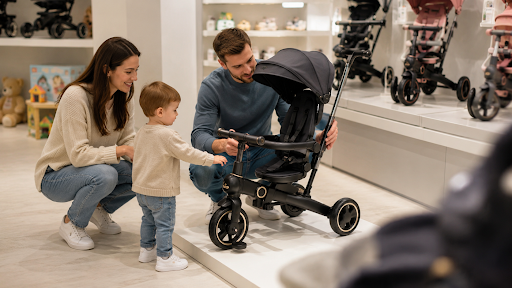
Children’s ride-on toys have become an important part of the global baby and toy market. Parents often look for products that encourage outdoor activity, support physical development, and provide children with an enjoyable way to explore their surroundings. For retailers and private-label businesses, tricycles can be a valuable product category when they are selected carefully.
Working with a dependable kids tricycle manufacturer can help businesses develop products that meet customer expectations for safety, comfort, appearance, and everyday usefulness. However, choosing the right product involves more than comparing prices or selecting an attractive design from a catalog.
Retailers should understand how families use tricycles, which features matter most, and what quality checks should be completed before placing a large order. A well-planned tricycle collection can provide better value to customers and help a brand build a more reliable reputation.
Understand the Role of a Kids’ Tricycle
A tricycle is often one of a child’s first personal riding products. It allows children to become familiar with steering, pedaling, movement, and balance in a more stable format than a bicycle.
Tricycles may also encourage children to spend more time outdoors. Regular active play can support coordination and help children become more confident in their physical abilities.
For many families, a tricycle is not only a toy. It may be used during:
- Short family walks
- Outdoor play in gardens or parks
- Early riding practice
- Trips around the neighborhood
- Supervised indoor play in larger spaces
Retailers should choose products based on these real-life uses rather than focusing only on visual appearance.
Identify the Correct Age Range
Age suitability is one of the first things buyers should consider. A tricycle made for a small toddler may need more parental control and support, while a model designed for an older child may focus more on independent pedaling and steering.
Buyers should review the product’s recommended age range, size, maximum weight capacity, and adjustable features. These details should also be clearly displayed in product listings and packaging.
A younger child may benefit from:
- A protective safety bar
- A secure harness
- A supportive seat
- A parent push handle
- A footrest for non-pedaling stages
- A canopy for outdoor use
Older children may prefer a simpler tricycle with direct steering, accessible pedals, and a comfortable riding position.
Decide Between Standard and Multi-Stage Models
Standard tricycles are usually designed for children who can already sit comfortably, steer, and begin pedaling independently. These models often have fewer removable parts and may be easier to assemble and store.
Multi-stage tricycles are designed to change as a child grows. A single model may begin as a parent-controlled ride and later convert into an independent tricycle.
Depending on the design, removable or adjustable parts may include:
- Parent handles
- Safety bars
- Canopies
- Footrests
- Back supports
- Pedals
- Seat cushions
Multi-stage models can offer longer use, which may make them attractive to parents who prefer practical products that grow with their children. Retailers can often benefit from offering both basic and advanced options.
Make Safety a Main Priority
Safety should be considered during design, manufacturing, testing, packaging, assembly, and daily use. It should never be treated only as an advertising feature.
Buyers should inspect the stability of the frame and ensure that the tricycle does not tip easily during normal riding. The steering system should move smoothly without feeling too loose or too stiff.
Other safety areas to review include:
- Secure folding locks
- Strong wheel connections
- Smooth edges and corners
- Reliable brakes where included
- Stable footrests
- Properly attached pedals
- Secure seat belts or harnesses
- Covered or protected moving parts
The product should also meet the testing and labeling requirements of the country where it will be sold. Importers should confirm which certificates, warnings, reports, and instructions are required for their market.
Examine Materials and Build Quality
A product can appear impressive in photographs but perform poorly if the materials are weak or the assembly is inconsistent. Buyers should examine the frame, plastic parts, wheels, seat, fabric, fasteners, and connection points.
Metal frames should feel stable and properly finished. Plastic components should not have sharp edges, cracks, or uneven surfaces. Wheels should move smoothly and remain aligned during use.
The seat should provide suitable support without shifting. Fabric parts, such as canopies and seat covers, should have clean stitching and secure attachments.
Before confirming production, buyers should request information about:
- Frame materials
- Wheel materials
- Plastic types
- Fabric options
- Surface finishes
- Hardware and fasteners
- Product weight
- Maximum user weight
Understanding these details can help retailers compare products more accurately.
Consider Comfort for Children and Parents
Comfort plays an important role in the overall customer experience. Children may lose interest in a tricycle if the seat is uncomfortable, the pedals are difficult to reach, or the riding position feels awkward.
Retailers should check whether the seat provides enough support and whether its position can be adjusted. The handlebar should be easy for a child to hold, while pedals should match the intended age group.
For parent-controlled models, the push handle should feel comfortable and stable. Parents should be able to steer without applying unnecessary force.
Useful comfort features may include:
- Padded seating
- Adjustable seat positions
- Soft handle grips
- Foldable footrests
- Supportive backrests
- Height-adjustable parent handles
- Sun-protection canopies
These features can improve usability, especially for families who use the tricycle during longer outdoor walks.
Review Folding and Storage Features
Storage space is limited in many homes, apartments, vehicles, and retail warehouses. Folding designs can therefore offer an important advantage.
A folding tricycle should be easy for an adult to close and open, but its locking mechanism must remain secure during use. The folded size should also be practical for car trunks, closets, and home storage areas.
Buyers should check:
- Folded product dimensions
- Number of folding steps
- Locking mechanism
- Overall product weight
- Whether tools are required
- Whether parts need to be removed
- Ease of carrying after folding
Compact designs may also improve shipping and warehouse efficiency. However, reducing carton size should never result in poor product protection.
Explore Branding and Customization Options
Retailers and private-label brands often need products that match their own visual identity. Customization may include colors, logos, packaging, manuals, accessories, fabrics, and product finishes.
At this stage, selecting an experienced kids tricycle manufacturer becomes especially important. The supplier should clearly explain which elements can be modified and whether the requested changes affect cost, order quantity, production time, or testing requirements.
Common customization options may include:
- Custom frame colors
- Printed or molded logos
- Branded seat fabrics
- Custom carton artwork
- Instruction manuals in different languages
- Color-matched wheels or handles
- Additional baskets or accessories
- Private-label stickers and warning labels
Customization should have a clear purpose. It may help a product suit a specific market, strengthen brand recognition, or make the design more useful for customers.
Retailers should avoid making unnecessary changes that increase costs without improving the product.
Request and Inspect Product Samples
A product sample gives buyers the opportunity to examine the tricycle before approving mass production. This step can reduce misunderstandings and help identify design or quality issues early.
The sample should be assembled and tested in realistic conditions. Buyers should not approve it based only on its appearance.
During sample inspection, check:
- Product measurements
- Frame stability
- Wheel alignment
- Pedal movement
- Steering response
- Folding function
- Harness security
- Seat comfort
- Canopy movement
- Logo position
- Color accuracy
- Assembly instructions
- Carton quality
Any required changes should be recorded clearly. Photographs, measurements, and written notes can help both the buyer and supplier confirm the final approved specifications.
Pay Attention to Packaging Quality
Packaging has several important functions. It protects the product during shipping, provides information to customers, supports branding, and affects the first impression of the product.
Weak packaging may result in scratched frames, damaged plastic parts, missing accessories, or customer returns. Internal components should be arranged carefully and protected from movement.
Retail packaging may include:
- Product images
- Main features
- Recommended age
- Weight capacity
- Safety warnings
- Assembly guidance
- Included accessories
- Brand information
- Barcode and shipping details
For online sellers, packaging should also be strong enough for parcel delivery. Buyers may need to consider carton thickness, internal supports, drop testing, and part organization.
Create Clear Product Listings
A strong product listing helps customers understand exactly what they are purchasing. Descriptions should be accurate, simple, and realistic.
Retailers should explain whether the tricycle requires assembly, whether the parent handle controls steering, and which parts can be removed as the child grows.
A useful listing should normally include:
- Recommended age range
- Product dimensions
- Folded dimensions
- Product weight
- Maximum user weight
- Available colors
- Main materials
- Included accessories
- Assembly requirements
- Care instructions
- Safety guidance
Clear information can reduce customer confusion, negative reviews, and unnecessary product returns.
Compare the Total Cost, Not Only the Price
A low unit price does not always represent the best value. Buyers should calculate the total cost of sourcing, including customization, testing, packaging, inspection, transportation, storage, and possible defects.
A slightly higher-priced product may offer better value if it has stronger materials, clearer instructions, smaller packaging, fewer quality problems, or better customer support.
When comparing quotations, make sure every supplier is pricing the same specifications. Differences in materials, accessories, carton quality, or testing can significantly affect the final cost.
Important cost areas include:
- Product price
- Sample charges
- Logo or printing costs
- Custom packaging
- Testing expenses
- Tooling charges
- Quality inspection
- Shipping and freight
- Spare parts
- After-sales support
A complete comparison helps buyers avoid unexpected expenses later.
Build a Long-Term Supplier Relationship
A successful supplier relationship depends on clear communication and realistic expectations. Both sides should understand product specifications, approval processes, quality standards, delivery schedules, and responsibilities.
Retailers should provide complete requirements and respond quickly when approvals are needed. Manufacturers should communicate production changes, material issues, or possible delays as early as possible.
A reliable supplier should be able to support:
- Product selection
- Sample development
- Design adjustments
- Quality control
- Packaging preparation
- Production updates
- Shipping coordination
- Repeat orders
- New product development
Long-term cooperation may also improve consistency. A manufacturer that understands the buyer’s standards can often handle future orders more efficiently.
Final Thoughts
Sourcing children’s tricycles requires careful planning. Retailers should consider safety, age suitability, comfort, materials, storage, packaging, customization, and market requirements before approving an order.
A strong tricycle collection should be easy for customers to understand and practical for families to use. It should also provide clear value rather than relying only on bright colors or additional features.
By reviewing samples, confirming specifications, and working with a responsive supplier, businesses can reduce sourcing risks and build a more trustworthy product range. Companies exploring adaptable tricycle designs and private-label support can learn more through bebeluxbaby.com.
